Powerline technicians build and repair the lines that carry electricity across the country. Here are a few of the people and projects that made long-distance power possible.
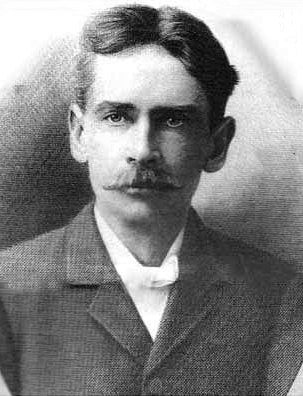
William Stanley Jr., about 1895Unknown author, circa 1895. Public domain. Wikimedia Commons. Image source
William Stanley lights up Main Street
1885 to 1886 · William Stanley Jr. (1858 to 1916)
William Stanley Jr. worked as chief engineer for George Westinghouse. In 1885 he built a practical alternating current transformer, improving on an earlier design by Lucien Gaulard and John Dixon Gibbs.
Late that year Stanley moved his work to Great Barrington, Massachusetts. He set up a generator and ran wires along the town's main street. Transformers stepped the voltage up for the line and back down where it was used.
On 20 March 1886 his system lit offices and stores on Main Street. It was one of the first complete systems to send alternating current at high voltage and step it down for customers. That idea, high voltage on the line and lower voltage at the service, is still how distribution works.
Westinghouse tested the system further in Pittsburgh that summer, over a distance of about 3 miles. Stanley went on to earn 129 patents. The Great Barrington work is now an IEEE Milestone, and every pole-top transformer a powerline technician hangs follows the same basic plan.
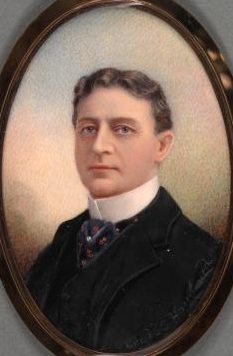
Adam Beck, 1902Gerald Sinclair Hayward, 1902. Public domain. Wikimedia Commons. Image source
Adam Beck and power at cost
1906 to 1925 · Sir Adam Beck (1857 to 1925)
Adam Beck was born in Baden, Canada West, in 1857. He made his money in a cigar-box factory in London, Ontario, then became the city's mayor and a member of the Ontario legislature.
Beck believed electricity from Niagara Falls should serve the public, not just private companies. His slogan was Power at Cost. After an inquiry he chaired, Premier James Whitney created the Hydro-Electric Power Commission of Ontario in 1906, with Beck as its first chairman.
The commission's first job was to build transmission lines to carry Niagara power to towns and cities. On 11 October 1910 Berlin, now Kitchener, became the first city in Ontario to get hydroelectric power over long-distance lines from Niagara Falls. More towns were switched on in big public ceremonies into 1911.
Beck was knighted in 1914 for his work on electricity and transmission lines. The commission later became Ontario Hydro. Beck's name lives on at the Sir Adam Beck generating stations at Niagara. The crews who strung those first lines were doing the same work powerline technicians do today.
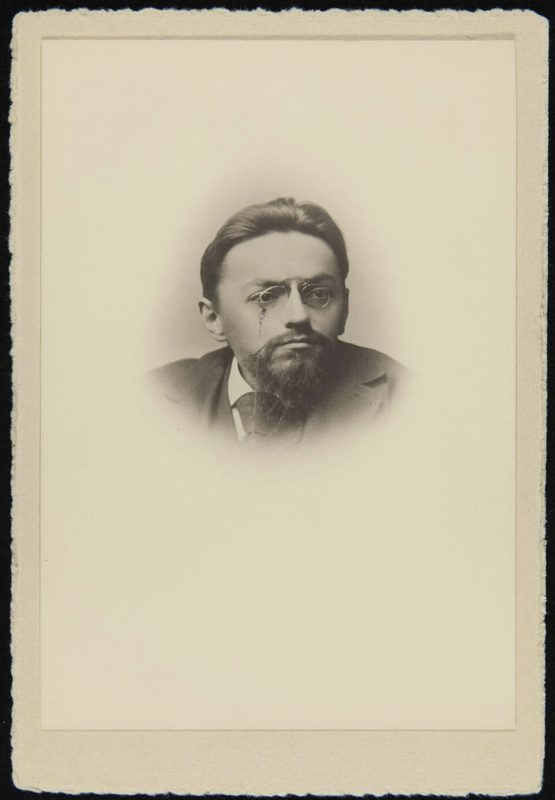
Charles Steinmetz, about 1900White Studio (Schenectady, N.Y.), circa 1900. Public domain. Wikimedia Commons. Image source
Charles Steinmetz makes lightning
1890s to 1920s · Charles Proteus Steinmetz (1865 to 1923)
Charles Proteus Steinmetz was a mathematician and electrical engineer who worked for General Electric in Schenectady, New York. He did key work on alternating current theory and on how magnetic materials lose energy.
Lightning was a big problem for early power lines. A strike could flash over insulators, burn out equipment and knock out customers. To understand it better, Steinmetz ran systematic experiments on high-voltage discharges.
He built what was described as the first lab-made, man-made lightning. The work was done in a very large laboratory at General Electric using 120,000-volt generators. The work earned him the nickname Forger of Thunderbolts. Like Nikola Tesla, he also put up a lightning tower to attract real strikes and study them.
Research like his helped engineers design better insulation and protection for lines and substations. Surge arresters, shield wires and proper grounding all exist because lightning will find the easiest path to earth. Powerline technicians install that protection on poles and towers every day.
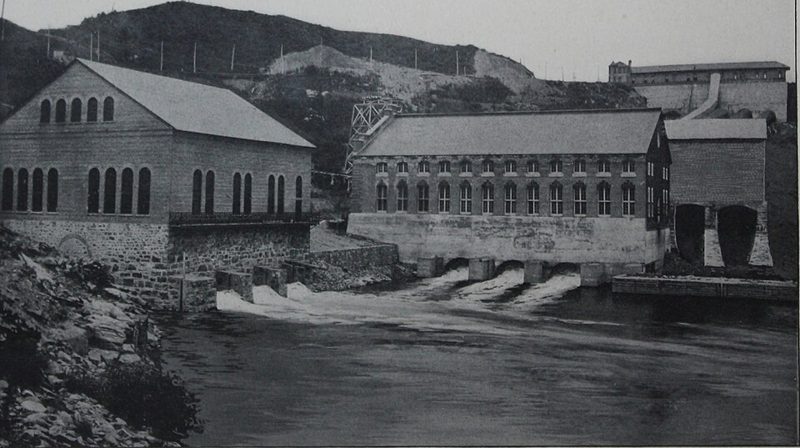
Shawinigan Water and Power Company plant, from a 1907 company bookThe Shawinigan Water And Power Company, 1907. No restrictions. Wikimedia Commons. Image source
Shawinigan harnesses the Saint-Maurice
1898 to 1963 · John Edward Aldred and the Shawinigan Water and Power Company
The Shawinigan Water and Power Company was founded on 15 January 1898. Its president was the American businessman John Edward Aldred, and it took its name from Shawinigan, Quebec, on the Saint-Maurice River.
The company's first station, Shawinigan 1, was built at Shawinigan Falls around 1901. More followed over the next decades, including Shawinigan 2, La Gabelle, Rapide-Blanc, La Trenche and Beaumont. By 1956 the company had about 1,284 megawatts of generating capacity.
All that power had to reach customers. Its customers included Shawinigan Carbide and the Belgo pulp and paper mill, and its lines carried electricity to towns and cities. The company grew into one of the main privately owned power companies in Canada.
In 1963 the Shawinigan Water and Power Company became part of Hydro-Québec, when Quebec bought out nearly all of the private power companies. Many of the dams and lines it started are still in service, maintained by line crews today.
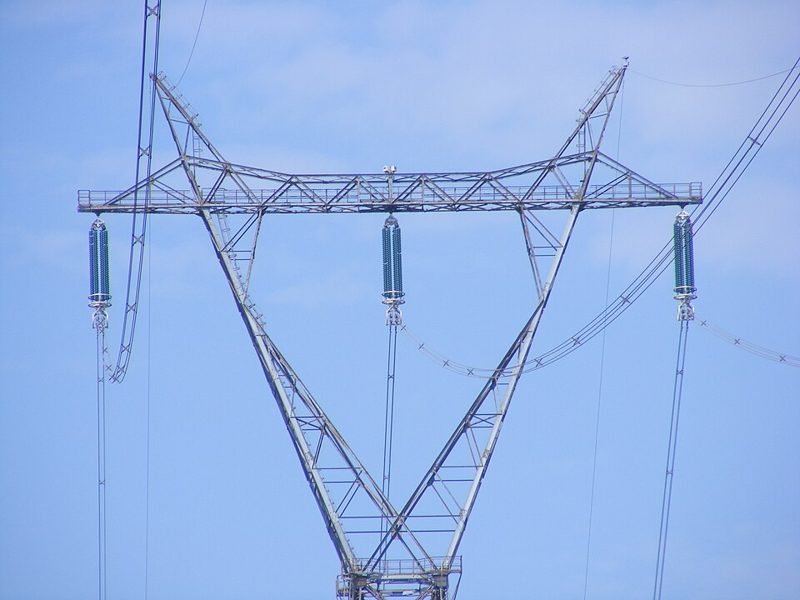
Hydro-Québec high-voltage linesabdallahh from Montréal, Canada, 2007. CC BY 2.0. Wikimedia Commons. Image source
Quebec builds the first 735 kV line
1962 to 1965 · Jean-Jacques Archambault and Hydro-Québec
In the early 1960s Hydro-Québec started building the Manicouagan-Outardes hydroelectric complex on Quebec's North Shore. The power had to travel hundreds of kilometres to Montreal and Quebec City.
At the time, the world standard for big transmission lines was about 300 to 400 kilovolts. Higher voltage means less current for the same power, so less is lost along the way. Led by engineer Jean-Jacques Archambault, Hydro-Québec decided to go much higher, to 735 kilovolts.
Construction began in 1962. On 29 November 1965 the first 735 kV line went into service, carrying power from the Manicouagan-Outardes complex toward Montreal. It was the first AC transmission system in the world built and run above 700 kV, and it is now an IEEE Milestone.
Over the next 20 years Quebec built a large 735 kV grid. Much of Quebec is served by a few of these lines, which made the 1998 ice storm outage so severe. Keeping them in service is still big work for line crews.