Industrial electricians keep motors, drives and controls running in plants and mills. Here are a few of the people who made the electric motor practical.
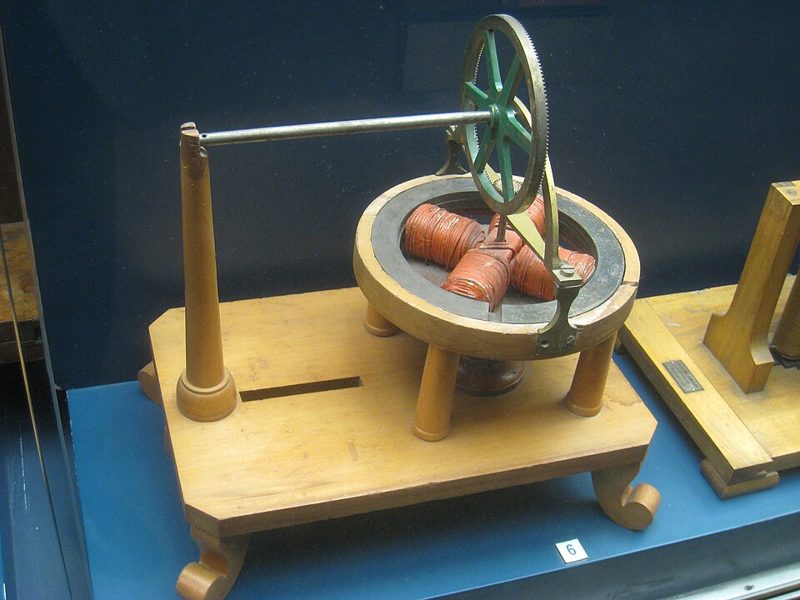
An electric motor from 1837 in a museum collectionDaderot, 2011 photo. Public domain. Wikimedia Commons. Image source
Thomas and Emily Davenport build a motor
1833 to 1837 · Thomas Davenport (1802 to 1851) and Emily Davenport
Thomas Davenport was a blacksmith in Brandon, Vermont. In 1833 he visited an iron works at Crown Point, New York, where an electromagnet was being used to separate iron ore. He was fascinated.
Davenport bought an electromagnet and took it apart to see how it worked. Then he forged a better iron core and rewound it. According to the story, he used silk from his wife Emily's wedding gown to insulate the wire.
By 1834 Thomas and Emily had built a battery-powered electric motor. They used it to run a small model car around a short track, an early try at electric transport. With Emily and a colleague, Orange Smalley, Davenport received US Patent No. 132 in 1837, the first American patent on an electric machine.
Davenport's motor was ahead of its time. Batteries were expensive and there was no power grid, so it never made money. But the basic parts he worked with, an iron core, insulated windings and switching to keep it turning, are in every DC motor an industrial electrician meets.
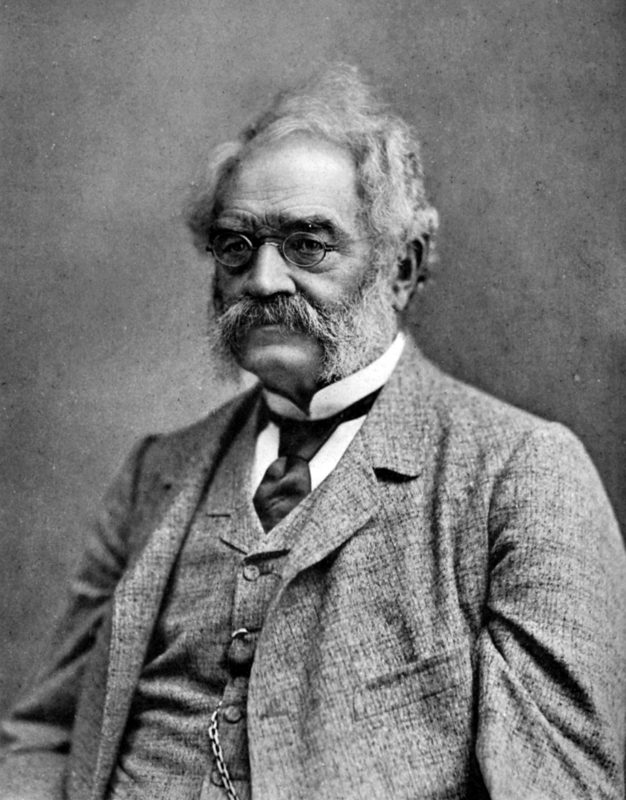
Werner von SiemensGiacomo Brogi, Unknown date. Public domain. Wikimedia Commons. Image source
Werner von Siemens and the dynamo
1847 to 1880 · Werner von Siemens (1816 to 1892)
Werner von Siemens started out building telegraphs. In 1847 he and Johann Georg Halske founded a company in Berlin to make his pointer telegraph, which showed letters on a dial instead of using Morse code.
Early generators used permanent magnets or batteries to make their magnetic field, which limited how much power they could produce. In 1866 Siemens worked out the dynamo-electric principle. A generator could feed some of its own output back into its field windings. A little leftover magnetism starts it, and the field builds up as it turns.
That self-excited dynamo meant generators could be made large and powerful without batteries. Others were working on the same idea at about the same time, but Siemens' work became famous and helped start the age of electric power.
His company went on to build the first electric passenger train in 1879 and the first electric elevator in 1880. Industrial electricians still deal with field windings, residual magnetism and flashing a field on DC machines, all part of the story Siemens started.
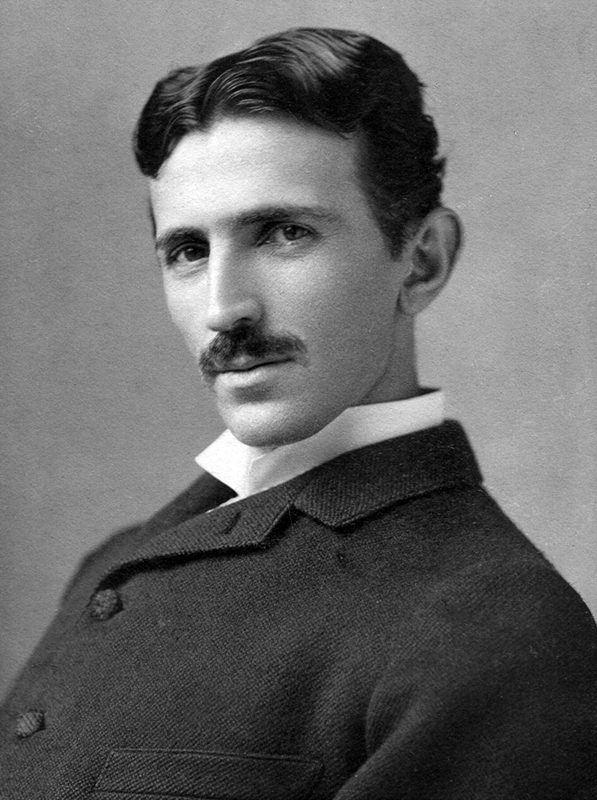
Nikola Tesla, about 1890Napoleon Sarony, circa 1890. Public domain. Wikimedia Commons. Image source
Nikola Tesla's induction motor
1887 to 1888 · Nikola Tesla (1856 to 1943) and Galileo Ferraris (1847 to 1897)
Early electric motors ran on direct current and needed brushes and a commutator to switch the current as they turned. Brushes wear, spark and need care.
In the 1880s two inventors found another way. Galileo Ferraris in Italy built a working model in 1885, and Nikola Tesla built his in 1887. Both used several alternating currents, out of step with each other, to make a magnetic field that rotates. The rotor simply follows that field. No commutator is needed.
Tesla applied for US patents in late 1887 and was granted some in May 1888, including US 381,968 for an electro-magnetic motor. That month he presented a paper to the American Institute of Electrical Engineers. George Westinghouse licensed Tesla's patents in 1888.
In 1889 Mikhail Dolivo-Dobrovolsky invented the squirrel-cage rotor, which made the motor simpler still. The three-phase induction motor became the standard for pumps, fans, conveyors and compressors. It is the motor industrial electricians wire, test and troubleshoot more than any other.
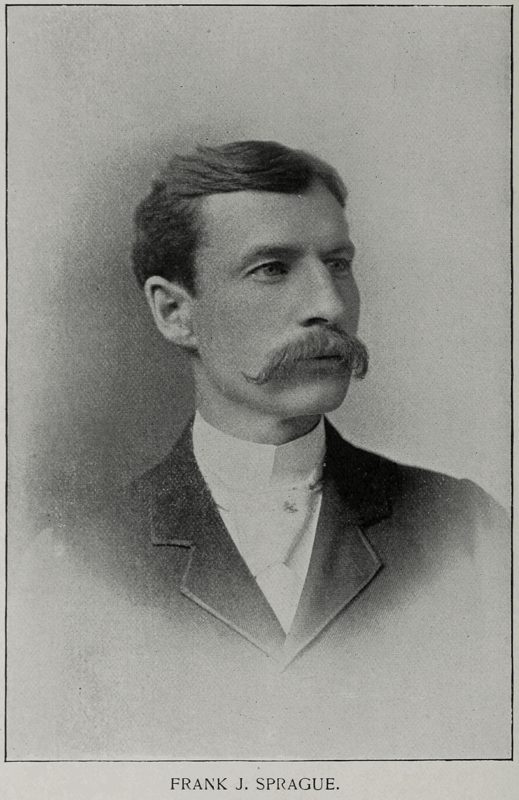
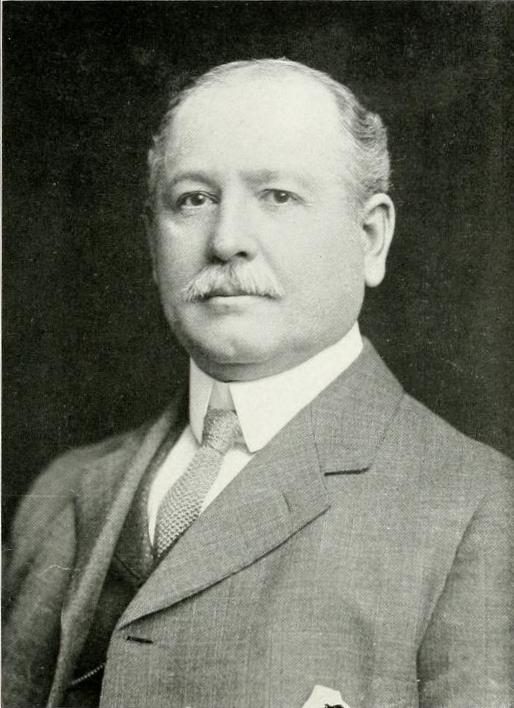
Frank J. Sprague, about 1892Unknown photographer of the time, circa 1892. Public domain. Wikimedia Commons. Image source
Frank Sprague's constant-speed motor
1884 to 1888 · Frank J. Sprague (1857 to 1934)
Frank Julian Sprague graduated from the US Naval Academy in 1878. He went to work for Thomas Edison, but he wanted to work on motors while Edison was focused on lighting. So Sprague left and started his own company.
By 1886 his company had two big inventions. One was a DC motor with fixed brushes that did not spark and kept a constant speed even when the load changed. It was the first motor to do that, and Edison endorsed it. The other was regenerative braking, where the motor works as a generator to slow down and sends power back to the supply.
In 1887 and 1888 Sprague built an electric street railway in Richmond, Virginia, with streetcars taking power from overhead wires. It was the first successful large electric street railway system, and it is now an IEEE Milestone.
Sprague's motors went on to drive elevators and trains. Constant speed under load and regenerative braking are still key ideas for industrial electricians working on motors and drives.
Harry Ward Leonard, before 1916Unknown photographer, by 1916. Public domain. Wikimedia Commons. Image source
Harry Ward Leonard controls the speed
1891 to the 1980s · Harry Ward Leonard (1861 to 1915)
Harry Ward Leonard was born in Cincinnati in 1861 and graduated from MIT in 1883. He worked for Thomas Edison setting up central power stations, then ran his own electrical company.
Getting a DC motor to change speed smoothly was hard. In 1891 Leonard introduced a new system. A prime mover, often an AC motor, drives a DC generator. The generator feeds the DC motor. By adjusting the generator's field, you change the voltage it puts out, and so the speed of the motor, right down to zero and into reverse.
The Ward Leonard system gave smooth speed control and steady torque. It ran a moving sidewalk at the 1900 Paris Exposition, passenger lifts in large mines and many elevators. It was used for elevators until thyristor drives arrived in the 1980s.
Some Ward Leonard sets are still running. Even where they are gone, the idea of controlling motor speed by controlling the voltage applied to it lives on in modern DC drives that industrial electricians set up and maintain.